Jump to ratings and reviews
Rate this book

Chasing the Scream: The First and Last Days of the War on Drugs

Rate this book
New York Times Bestseller

It is now one hundred years since drugs were first banned in the United States. On the eve of this centenary, journalist Johann Hari set off on an epic three-year, thirty-thousand-mile journey into the war on drugs. What he found is that more and more people all over the world have begun to recognize three startling truths: Drugs are not what we think they are. Addiction is not what we think it is. And the drug war has very different motives to the ones we have seen on our TV screens for so long.

In Chasing the Scream, Hari reveals his discoveries entirely through the stories of people across the world whose lives have been transformed by this war. They range from a transgender crack dealer in Brooklyn searching for her mother, to a teenage hit-man in Mexico searching for a way out. It begins with Hari's discovery that at the birth of the drug war, Billie Holiday was stalked and killed by the man who launched this crusade--and it ends with the story of a brave doctor who has led his country to decriminalize every drug, from cannabis to crack, with remarkable results.

Chasing the Scream lays bare what we really have been chasing in our century of drug war--in our hunger for drugs, and in our attempt to destroy them. This book will challenge and change how you think about one of the most controversial--and consequential--questions of our time.

400 pages, Hardcover

First published January 15, 2015

2976 people are currently reading
44957 people want to read

About the author

Johann Hari

29 books3,254 followers
Johann Hari is an award-winning British journalist and playwright. He was a columnist for The Independent and the Huffington Post, and has won awards for his war reporting. His work has also appeared in the New York Times, the Los Angeles Times, The New Republic, The Nation, Le Monde, El Mundo, the Melbourne Age, El Pais, the Sydney Morning Herald, the Irish Times, The Guardian, Ha'aretz, the Times Literary Supplement, Attitude (Britain's main gay magazine), the New Statesman and a wide range of other international newspapers and magazines.

Hari describes himself as a "European social democrat", who believes that markets are "an essential tool to generate wealth" but must be matched by strong democratic governments and strong trade unions or they become "disastrous". He appears regularly as an arts critic on the BBC Two programme Newsnight Review, and he is a book critic for Slate. He has been named by the Daily Telegraph as one of the most influential people on the left in Britain, and by the Dutch magazine Winq as one of the twenty most influential gay people in the world.

After two scandals in 2011 involving plagiarism and malicious editing of Wikipedia pages, Hari was forced to return the prestigious Orwell prize he had won in 2008, and lost his position at The Independent.

Ratings & Reviews

What do you think?
Rate this book

Friends & Following

Create a free account to discover what your friends think of this book!

Community Reviews

5 stars
13,249 (62%)
4 stars
5,952 (27%)
3 stars
1,615 (7%)
2 stars
333 (1%)
1 star
123 (<1%)
Displaying 1 - 30 of 2,541 reviews
Profile Image for Leo Robertson.
Author 39 books493 followers
October 29, 2015
Essential reading for humans.


I'm all for anything that refreshes in the reader a feeling that compassion is urgent. Here in this book we have strong evidence, all over the world, of a compassion-starved state of emergency, of antiquated laws driving people into isolation, ostracizing them and pushing them further from essential human connection.

I've never before listened to the argument that we should legalise all drugs, mostly because the person who's brought it up only wants to legalise drugs so they themselves can take drugs, and when we have this conversation these people are often on drugs also, and they superficially quote some single bullshit article that they read once because the title of it reassured them that they wouldn't have to change their opinion of anything by the end. Just like Russell Brand, these people give good ideas a bad rap, false and unwanted ambassadors that manage to make common sense unseemly!

Anyways, this book is the opposite. The journey of one man who began to research the war on drugs and allowed his opinion to be swayed by the evidence, of which there is bucketloads, that legalisation of drugs is the way forward (and depending on the drug depends how, of course, and the best method for each is all explained and backed with real world examples of the given suggestions working.)

Humans are animals and getting high is a thing that animals do. Best case is not abstinence but safe use (and safe use reduces overall use and encourages switching to less dangerous drugs!). The consequences of not accepting this are deadly.

READ
Profile Image for Josh Johnson.
3 reviews1 follower
January 19, 2015
It's quite ironic that this is probably the most addictive book I've ever read. Harrowing and emotional but something everyone should read!
Profile Image for Michael Flanagan.
495 reviews25 followers
February 16, 2015
Every now or then a book comes along that leaves you breathless and changes the way you look at the world. Chasing The Scream is one of those books a profound read that has made me rethink the war on drugs on made me look at how I carry out my own work.

The war on drugs whether you know it or not has changed the very nature of the society we live in. It has turned a health issue into one of crime and by doing so encouraged more crime and violence. The evidence gathered in this book is overwhelming and when coupled together with the stories gathered by the author make for an unforgettable read. I defy anyone to read this book and tell me the War on Drugs is right and just. The author not only gathers evidence and personal stories but also traces the history of the War on drugs to deliver a well rounded read.

As a Correctional officer that deals with the Drug Policy I thought I had a good grasp on this issues. I now find myself completely rethinking how we go about our drug policy and how we can move away from a punitive model to one that is supportive and understanding of drugs and addictions. I am in total awe of what Johann Hari has managed to deliver in this book and rate this as one of the most important books I have read.
Profile Image for Perry.
634 reviews612 followers
September 4, 2017
Engrossing Exploration of Drug War Failures

"I've seen the needle and the damage done
A little part of it in everyone
But every junkie's like a settin' sun."
"Needle and the Damage Done," Neil Young, 1972


An engrossing exploration of the failures of the "war on drugs." The narrative tracks through the war's czar in the U.S., users and abusers, peddlers, law enforcement, the poor souls who have been "collaterally damaged" (family members and innocent bystanders), current policy makers, as well as governments who have legalized certain drugs (like marijuana in Vancouver) and all drugs (Portugal). I also found his coverage of studies on addiction fascinating.

The psychology is such a crucial piece of the logical simple economics equation: people will NOT stop using and abusing drugs. Governments will fail at stopping demand, prohibitions and restrictions on supply thus only influence prices and buyer patterns. This generates huger profits leading to bigger, stronger criminal rackets (gangs, cartels, etc.) and wars among them, as well as many more crimes by the drug abusers (thefts, muggings, murders) to keep the addiction fed, all of which results in much more harm to many more victims, deaths and exponentially higher costs to society.


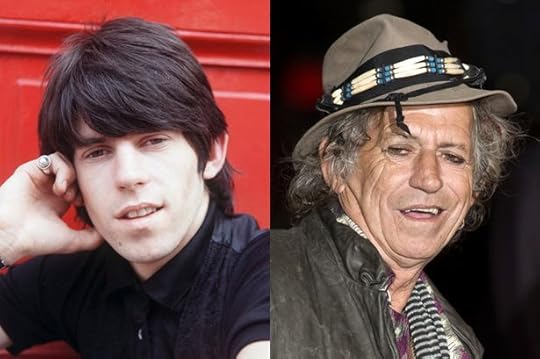
Keith Richards, Day-by-Day Devastation of Heroin Addiction

With a conversational writing style, Mr. Hari makes a compelling argument for legalization of all but darkly-affecting drugs like heroin and crack. While I do not believe I will see such legalization happen in my lifetime, this is a much-needed treatment of the subject that is certain to start conversations in some of the right locations. I cannot say he's convinced me of the answers, but I am much closer to his side of the fence on certain drugs after reading this book.

I was definitely enlightened by this non-fiction book and recommend it, certainly if you have someone near and/or dear to you with a drug problem.
Profile Image for Kevin (the Conspiracy is Capitalism).
377 reviews2,253 followers
May 16, 2024
Chasing the “War on Drugs”…

--I immediately jumped on this book after being impressed by Hari’s Lost Connections: Uncovering the Real Causes of Depression - and the Unexpected Solutions (esp. given my disregard for popular psychology). I’ve encountered pieces of the “War on Drugs” from various angles (race, political economy, medical); Hari has synthesized these various dimensions and narrated it into an engaging tapestry.

Highlights:

1) The War’s archetypes :
--I suppose “war” and “tragedy” have much overlap. There are indeed villains (I’m most interested in those who knowingly profit on a systemic level while hiding in abstraction), but the tragedy comes from actors trapped in mutually-destructive logic:
a) Prohibitionists: modeled after the US drug tsar Harry Anslinger and driven by the irrational fear to “chase the scream” (i.e. supposedly drug-induced hysteria) and destroy it: “turn our fears into symbols, and destroy the symbols, in the hope that it will destroy the fear”
--Prominent symbols for scapegoating are visible minorities (“race panic”); popularized in The New Jim Crow: Mass Incarceration in the Age of Colorblindness. Hari notes that since many people are already breaking prohibitionist drug laws, minorities are the convenient weakest link to target and uphold such laws.
--Since prohibition is aiming at a drug-free world, the focus cannot be on treating addiction (since the vast majority of drug-use is recreational without addiction).
b) Dealers: criminalization turns the long history of mild drug use into a “War for Drugs” in illegal markets, regulated by 2 “laws”: escalating violence (“culture of terror” to build reputation) and escalating drug potency (“Iron Law of Prohibition” = smuggling maximum potency to maximize profits despite higher demand for milder forms).
c) Marginalized casualties: more on this later; for now:
This use of solitary confinement is a standard punishment in American prisons. Not long before this, a mentally disabled man in another Arizona prison called Mark Tucker was kept in solitary for so many years, with his pleas for a cellmate refused, that he eventually set himself on fire. In the hospital, with 80 percent of his body burned, he was informed that the Department of Corrections was charging him $1.8 million to pay for the medical care to treat his injuries.
d) Protests:
i) Doctors treating addiction: medical practice uses some very strong painkillers. These are rarely problems if doctors are allowed to wean patients off them. The focus on overprescribing misses several key considerations. Firstly, the US’s Drug War has prevented doctors from treating addicts, which means terminating the weaning-off phase when it is most needed! Secondly, the drug war has prohibited the use of stigmatized drugs in treatment (ex. heroin), replacing these with less effective options (ex. methadone) (I Think You'll Find It's a Bit More Complicated Than That).
ii) Anti-prohibition: one framing argues that prohibition is clearly the worst option; this has been a useful way to bridge with some Conservatives, i.e. the baseline can still be drug prevention while treatment-over-prohibition actually restores order and protects the community (not just the addicts).
iii) Responsible use: the other framing is more socially-liberal, recognizing the vast majority of drug-use is recreational and non-addictive while the dangers come from criminalized access (since chemically: alcohol/cigarettes are surprisingly addictive/harmful). Details on decriminalization vs. legalization, etc.

2) Vancouver, the “Terminal City”:
--Living in Greater Vancouver, 45 minutes away from the DTES (Downtown Eastside), it was intense to find Vancouver as the most-covered city (3 chapters) in this book! Of course, this portrayal is Western-centric (side note: I’d be interested to read how China dealt with the Opium crisis).
--Gabor Maté (In the Realm of Hungry Ghosts: Close Encounters with Addiction) works as a doctor in the DTES and focuses on the childhood trauma background of addicts. “If negative consequences led people to transformation, then I wouldn’t have a single patient left.”
--Bruce K. Alexander countered the prior animal experiments supposedly demonstrating the chemical hooks of drugs (i.e. caged rats choosing drugs) by suggesting the unnatural conditions of caged rats (solitary confinement = torture). Alexander instead created “rat park” experiments to reveal how rats in better socioenvironmental conditions (“park”) have better options and would avoid addiction even when presented with drugs: “Addiction is an adaptation. It’s not you—it’s the cage you live in.”
…for human “experiments”, we can consider the drug addiction of US troops in the genocidal war on Vietnam and how this overwhelmingly ceased upon return. From this, we can consider: indigenous land loss, 18th century English rapid urbanization (gin addiction), 1970’s US deindustrialization (crack pipe), 1980’s US heartland lose markets/subsidies (meth), and the overall modern dislocation + advertising of consumerism/objectification.

3) Next step: Political Economy:
--To fully engage with the societal roots of addiction, we need to synthesize political economy (this is implied but mostly missing from the book, so I'll try to supplement). After all, Hari concludes with DTES grassroots activism pushing Vancouver to have perhaps the most progressive drug laws (harm reduction) in North America... yet today the opioid crisis here continues to worsen, remaining an official Public Health Emergency (joined recently by the COVID pandemic).
--Addiction can be better managed with progressive drug policies, but this is not preventative! More addition is created (which harm reduction cannot keep up with) due to the dispossession/exploitation/alienation/volatility of capitalism:
i) Additive behaviours are normalized via advertising. Capitalist profits require cancerous growth in purchases, which incentivizes manufactured dissatisfaction (thus desire for more purchases) rather than long-term fulfilment.
ii) Social relationships are pressured to become either instantaneous market transactions (effectively between self-seeking strangers), or devalued ("externalized" from the market, in particular care work, in a capitalist society where value is increasingly monetized).
iii) Finance is privileged to traverse the globe in nanoseconds, while labour (humans) struggle to keep up, tearing apart socioecological relationships (i.e. long-term communities, relations with land)
iv) Financial speculation: social needs (ex. housing in Vancouver) become financial assets horded and gambled with (market = one-dollar-one-vote) by those with the most passive income (from ownership, not labour: Owning the Future: Power and Property in an Age of Crisis)
v) Technology serves finance, not communities; humans are cogs (alienated from workplace autonomy) and dispensable (structural unemployment from automation/capital flight, rather than receiving the fruits of more leisure time).
--An olive branch was earlier extended to conservatives (framing ending black market profits through decriminalization as actually restoring order/community safety), but iconic shill/lover-of-capitalist-dictators Milton Friedman is undeserving. Friedman’s critique of the “War on Drugs” as “the ultimate big government program—a criminal waste of money”, saying “You want to balance the budget and get our fiscal health in shape? Let’s get realistic.” might seem like a potential source of unity against the War on Drugs, but Friedman is manipulating dangerous myths (the State vs. “free market”, markets as human nature/peak freedom, etc.):
...“Capitalism”, where society’s production/distribution are driven by endless private accumulation, has always required a (capitalist) “State”.
…Markets exchanging “real commodities” (i.e. produced goods/services) have long pre-dated capitalism. Capitalism features 3 peculiar markets, exchanging “fictitious commodities” (labour/land/money) since humans/nature/purchasing power are not “produced” like real commodities with a clear cost of production just for buying/selling on markets.
…These peculiar markets require the violence of the capitalist State to create and maintain (i.e. capitalist property rights):
i) Dispossessing people from access to land as a means of subsistence, creating the land market and policing its property rights: both domestic (England’s “Enclosures” of the “Commons”) and foreign (colonialism/settler colonialism).
ii) The dispossessed must then sell their labour on the labour market, in the “dark Satanic mills” of industrialization’s slums (not to mention slavery/indentured servants on colonial plantations). Work skills need to be prepared (education), work discipline needs to be policed, etc.
iii) The dispossessed become dependent on capitalist markets for goods (along with debt traps), thus money and money/financial markets with their litany of invented rules (private bureaucracies), the last insurer as the State to shift the clean-up of crashes onto the public (“privatize the rewards, socialize the costs”), etc.

--Finally, love the bite in Hari’s writing style (like Matt Taibbi):
All over America, [Harry] Anslinger had cut off legal avenues to drugs and forced addicts to go to gangsters for a filthy supply. But he had always pictured it being done to the “unstable, emotional, hysterical, degenerate, mentally deficient and vicious classes.”

Now, before Harry, there was a man he respected, and he was an addict. So he assured the legislator that there would be a safe, legal supply for him at a Washington, D.C., pharmacy so he would never have to go to the gangsters or go without. The bureau even picked up the tab until the day the congressman died. A journalist uncovered the story and was about to break it. Harry told him that if he published a word, Harry would have him sent to prison for two years. He smothered the story.

Years later, when everybody involved was dead, Will Oursler—who wrote Anslinger’s books with him—told the Ladies’ Home Journal who this member of Congress was: Senator Joe McCarthy [infamous for “McCarthyism”, the “Second Red Scare” persecuting leftists]. Anslinger had admitted it to him and then looked away. McCarthy—the red-faced red-baiter—was a junkie, and Anslinger was his dealer. Nobody ever believes the drug war should be waged against somebody they love. Even Harry Anslinger turned into Henry Smith Williams [doctor treating addiction] when confronted with an addict he cared about.

Years later, after Harry retired, he developed angina, and he began to use the very drug he had been railing against: he took daily doses of morphine. Anslinger died with his veins laced with the chemicals he had fought to deny to the world.
Profile Image for Robin.
37 reviews33 followers
May 27, 2016
I have really mixed feelings about this book. Hari's writing style is excecrable, and his account of the drug war is oversimplified. I can't emphasize enough how poorly written this book is - it reads like overly emotional, ham-fisted pap. And yet, I have to say that I think this book's popularity will be a net positive on the balance. It brings together a lot of good arguments in one place and makes them easily digestible and relatable to the kind of reader who might not otherwise be motivated to consider them. Is it dumbed-down, poorly written, and intellectually dishonest? Yes. But it will help change the conversation about drug policy in the more mainstream circles of American culture. That can't be a bad thing.
Profile Image for Paul.
1,187 reviews40 followers
December 22, 2017
I have always been very anti-drug war, and so I am very much the "choir" that Hari is preaching to, but I cannot in good conscience recommend this book. From a policy perspective it seems like it could be very persuasive, so from an "ends justify the means" point of view, maybe I am a bit happy that it's out there, but it embodies almost everything I hate about popular journalism. I think that this New York Times review gives a good idea about many of this book's problems.

The absolute stand-out issue with this book is his pushing idiosyncratic views of addiction as if they are proven; for example, you can read this article about how the Rat Park experiment is flawed and misleading, which discusses how Hari's book has caused a revival of the study's popularity.

I think the overall problem with the book is that Hari's goal was obviously to generate a compelling narrative, and preferably a narrative that neatly makes the argument for drug legalization. Unfortunately, the world is, as always, nuanced and complicated and so when "create a narrative" is higher on your list of priorities than "convey the truth", you end up mangling true stories until they fit your narrative. As an example, Hari's favorite device is clearly the "journey of discovery", so it feels like every other sentence he's "discovering" some "shocking truth" that goes against everything he thought he knew. Hard to square this with the fact that he's been an advocate of drug legalization since at least 10 years before he started writing this book, apparently writing a well-known article about it called "Just you wait until I grow up" in the New Statesman.

1.5 of 5 stars
Profile Image for Melissa.
87 reviews12 followers
February 5, 2015
This is one of the best books I have read in a long time and should be a must read for anyone who works in the field of substance abuse/ addiction. It is well researched and offers a valid alternative to the failed war on drugs in the USA. I have always advocated for the legalization of drugs and a total overhall in our drug policies - this book provides evidence on why legalization is the way to go. It is compelling and fascinating. Seriously, just read it. Even if the topic doesn't appeal to you much, you should still read it. It was that good.
Profile Image for Heather.
88 reviews2 followers
December 5, 2014

Johann Hari sets out to answer some of our most pressing questions about “the war on drugs” in his book Chasing the Scream. Within the pages of this book, you will find out how and why the “war” began, how it impacts people from all walks of life, and how cities and countries across the world are changing the way they deal with both drugs and drug users.

Chasing the Scream is an absolute gem, and I honestly feel that it's one of the best examinations of drug policy that I've read. Hari examines the motivations behind drug policy (past and present) by weaving together facts and personal stories. He discusses the racial and economic biases that led to the desire to criminalize drugs in the first place as well as how these biases are seen in today's policies. Few people are willing to admit that the “war on drugs” was, at least in part, a war on societies “undesirables” and seeing this discussed so candidly was refreshing.

I grew up in a county that, at one point, had the highest rate of methamphetamine use in the state so I'm no stranger to the world of drugs and addiction. I thought I knew how drugs worked and why people became addicted. I thought I even knew why prohibition didn't work too well. This book challenged all of these ideas and has caused me to rethink a few of my opinions.

I would absolutely recommend this book to anyone whose interested in drug policy or even the culture that surrounds drugs and their abuse.

Note: I received this ebook free courtesy of Negalley in exchange for an honest review.
Profile Image for &#x1f33a; Hannah &#x1f33a;.
87 reviews21 followers
May 30, 2025
Had to read this for school but enjoyed it! It really challenges your thoughts and preconceived notions you have about this topic. Definitely recommend for anyone who is in or going into the mental health field/social work!
Profile Image for Lauren .
1,833 reviews2,541 followers
June 18, 2017
I've seen television interviews and roundtables with Hari, and when I found out that he had written a book about drug policy and the science and sociology of addiction, I immediately added the book to my library list.

The book was not what I was expecting - but this is not because I was disappointed with it in any way. What struck me is how very personal this book was for Hari. His first chapter explains the history of drug addiction in his family, and how it has also affected him personally. This first-person narrative continues throughout the book as he interviews people all over the world, recounting detailed history of the beginnings of the drug war - how "Mrs. Winslow's Soothing Syrup" (laced with morphine) was a bestselling tonic in Victorian times... and a few decades later, these opiates were suddenly vilified and rebelled against.

The historical opening chapters were an eye-opening narrative of a famous singer and the law enforcement officer who obsessively worked to bring her down - and expose her addiction to the world, thereby going on to change drug laws not only in the US, but all over the world, and the first drug- dealing gangster of NYC and his manical and deadly rule over the boroughs. Incredible detail and strong writing - great introduction to the book, and Hari refers back to this "groundwork" many times throughout the book.

Hari travels to the US, to Mexico, to Uruguay, to Canada, to Portugal, to Switzerland, and his own UK to learn about the global ramifications of this war on drugs. In the US and Latin America, the stories of powerful and horrific narco gangs are the true stories that have inspired popular films and television series (Sin Nombre, Narcos, Sicario, Breaking Bad) in recent years. In the US and Canada, and Europe, we learn of the addicts, and the deep stigmas and vilification of this population, and how some places - like Vancouver, BC - have worked extremely hard to change these stigmas.

The addiction conversation continues as Hari works with scientists and sociologists who turn the tables on how society can help addicts. All of these pieces fit together for the final case for decriminalization and legalization of these drugs. All drugs? Certain drugs? The debate rages on, and Hari describes this in detail.

The final chapter takes a close look at the two US states (at the time of writing in 2015) who have legalized marijuana for recreational use: Colorado and Washington. Hari interviews the advocates that worked in both states to legalize the substance, and how their philosophies and reasoning was vastly different. One of the final quotes in the book gave me a laugh, but also a pause - how much things have changed in a relatively short amount of time - and what we can expect in the future.

Spoken by one of the Colorado attorneys who played a key role in the Colorado campaign: "For years, the only discussion was: 'How long should we be locking people up for possessing marijuana?' Now we're discussing what the font should be on the label of the pot brownies."


4.5 /5 - rounded up because I learned so much from this book.
Profile Image for Alice.
902 reviews3,493 followers
August 9, 2019
Excellent at gathering information and facts as well as adding humanity to the topic by telling different people's stories, but overall not as revolutionary as I thought it was going to be.
Profile Image for J. Ewbank.
Author 4 books38 followers
December 13, 2014
That noise you just heard are the flying away of my presuppositions about the drug war. i have been naieve in the area of drugs and so have been pretty anti ddrugs. The things I hard about were scarry and awful. Though much of this remains true, I can see where legalization of some of the drugs would certainly hurt the drug trafficers and we could use the money to much more humanely work with those who are and weil become addicted. Johann Hari has asked and worked years to answer many of the questions You and I have had concerning the drug wars. It is an interesting and very thought provoking analysis.

J. Robert Ewbank author "John Wesley, Natural Man, and the Isms" "Wesley's Wars" and "To Whom It May Concern"
Profile Image for MichelinaNeri.
59 reviews9 followers
December 2, 2015
I only read the first third of this book before I made the mistake of Googling the author. There are too many books in the world I want to read without wasting my time on a disgraced journalist who betrayed the trust of his readers with plagiarism, fabrication and lies. Why should I ever trust anything he says? How can I trust anything in this book? Lying in journalism is a betrayal that I cannot forgive. Also, the unnecessarily sensationalist style of his writing, with the breathless and clunking opening to each chapter, reminded me of Dan Brown more than anything else.

http://blogs.telegraph.co.uk/news/bre...

"The key problem with Hari's approach to interviews... is that he has deployed the Noble Truth defence – the idea that it is okay to play fast and loose with the facts, and with reality itself, just so long as you end up telling a 'greater truth'. The notion that one can reach 'the truth' by manipulating reality should be anathema to anyone who calls himself a journalist... Hari admits to substituting his interviewees' written words for their spoken words, quoting from their books and pretending that they actually said those words to him over coffee. But that is okay, he says, because his only aim was to reveal 'what the subject thinks in the most comprehensible possible words' and to make sure that the reader 'understood the point'. He says he has interviewed people who have 'messages we desperately need to hear', 'brave' people with 'vital messages', and therefore it is in everyone's interests that he present those messages in the clearest manner possible. Even if that means fabricating a conversation..."
Profile Image for Lisa.
430 reviews
March 16, 2017
This is an eye opening book that everyone should read. It will change the way you think. Our War on Drugs does not work. It actually makes crime worse and the people who need help the most get thrown out by society. I don't like drugs but this book changed my mind on how we are treating the drug problem. It's been almost 100 years of doing it in a way that has only made it worse. We have high crime, drug addicts, diseases, gangs, death on the streets, incarceration that is off the charts, people afraid of cops, on and on. Read the book and you just might agree there are other ways to make it better. It truly is time to change our drug policies.
Profile Image for Ana.
2,390 reviews387 followers
April 23, 2017
This is a good introduction into how the drug war took over America. I still think Carl Hart's High Price is a more engrossing and scientific read, but this book condenses over 100 years of history for us non-drug users and I like that the desire to write it came from a place of compassion.
Profile Image for Richard.
1,269 reviews40 followers
February 14, 2015
Brilliantly constructed, lucid, compelling and mind changing

I am 100% changed in my views.

Thoroughly recommended
Profile Image for Hugo Marroquín.
Author 3 books227 followers
February 21, 2016
No pude imaginar lo que encontraría dentro. Ni siquiera el aviso en portada donde Elton John dice "impresionante" o Naomi Klein "apasionante" o bien Noam Chomsky como "fantástico". Bueno, nadie me lo ha pedido pero yo agregaría "humanamente abrumador".

Hemos escuchado hasta el cansancio sobre la guerra contra las drogas, la gente de la CDMX lo vive como algo lejano y un poco ajeno, los de Durango vieron su vida trastornada, los de Juárez su sociedad fracturada, y en Tamaulipas, arrasada. Sobre Colombia la historia se cuenta ahora en Netflix, se vive en una sociedad que busca redefinirse, reinventarse.

Pero ¿qué sabemos en realidad sobre las drogas y la guerra contra las drogas? En lo personal he seguido los debates sobre la despenalización o sobre la legalización de la marihuana cuando los ha habido, he tomado una postura personal al respecto, a favor por si ocupan saber. Pero he sido severo en mi juicio a aquellos consumidores que desde mi punto de vista alentaban la economía del narco con su consumo, igual reconocí a aquellos que no lo hicieron al sembrar la de consumo personal. Pero sobre todo, al terminar Tras el grito, me doy cuenta que he sido poco humano ante una cuestión que nunca tuve en mi rango de visión. Lo lamento por aquellos a quienes juzgué o no supe comprender.

Tras el grito de Johann Hari nos lleva a la comprensión del origen de la guerra contra las drogas, que vas mucho más allá de la imagen de Calderón montado con su diminuto tamaño en un vehículo militar al inicio de su mandato, más allá de los supuestos pactos de políticos y priístas para mantener la paz en las ciudades, más allá de los zetas o los narco de antaño que se movían con código de honor. Nos lleva al Estados Unidos de principios de 1900, nos cuenta la historia de vida de un personaje clave, quien motivado por el odio racial tendría una influencia que traspasaría las fronteras estadounidenses y a costa de la vida de personas como de la cantante de jazz Billie Holiday, definiría una política pública de prohibición y lucha contra las drogas que lo mismo se aplica en México, que en Colombia o Europa y casi todos los países del mundo.

Tras el grito nos resume tres años de investigación de Hari por Brooklyn, Londres, Uruguay, Portugal y la más dolorosa para mí, por Juárez, con el doloroso asesinato de Maricela Escobedo de un balazo en la cabeza el 16 de diciembre de 2010 frente al Palacio de Gobierno de Chihuahua a plena luz del día como resultado de la corrupción, la insensibilidad, el desinterés de su gobernante y el miedo de la sociedad.

Tras el grito es un puñetazo en la boca del estómago en la que todo lo que te han dicho, lo que crees que sabes, lo que insisten en los noticieros, los programas sociales para los adictos, todo eso sobre sobre la guerra contra las drogas y la adicción misma, se derrumba.

Tras el grito es humanamente abrumador porque pone en el centro lo esencial que hemos dejado del lado: al humano. Y digo que es abrumador pues nos obliga a comprender una historia de manera diferente a lo que el mainstream nos dice, lejana a la versión gubernamental que los medios de comunicación distribuyen como los cables hacen con la electricidad, lejana a discursos típicos de "vive sin drogas" o "las drogas destruyen". Pues nos pone en evidencia consideraciones nunca mencionadas.

Tras el grito es para mí desde ahora un libro esencial, imprescindible para cualquier persona, pues no necesitamos ser partícipes del debate sobre la legalización, no necesitamos tener consumidores en nuestro círculo cercano, no necesitamos ser consumidores nosotros mismos, es un libro para cualquier ciudadano pues le dará una información que necesita para vivir en el mundo que vivimos, pues en él se encuentra una semilla que que si germina, hará un mundo mejor.

Léelo, cuando lo termines te darás cuenta que lo necesitabas saber.

Quiero dedicar esta reseña a la memoria de Marisela Escobedo, una injusta víctima más de la guerra contra las drogas, la corrupción y la indiferencia gubernamental en México
Profile Image for Barry.
600 reviews
January 22, 2015
A very worthy, well-researched and well-written book. It should, I hope, come to be regarded as an important book.

I don't like the title, and I don't like that there are whole classes of drugs he ignores - concentrating on cannabis and heroin with a nod to cocaine, but largely ignoring the others, except to assassinate Timothy Leary. What he does cover though, he covers sensibly, intelligently and with touching humanity.
Profile Image for Linda.
1,009 reviews8 followers
February 17, 2015
One of the most readable, common sense books on the subject that I have read. It put a really interesting spin on the issue, and one that I feel is valid. "If we can't bond with other people, we will find a behaviour to bond with...if the only bond you can find that gives you relief or meaning...you will return to that bond obsessively." Should be recommended reading for all health care professionals, if for no other reason than to reawaken compassion.
Profile Image for Nigeyb.
1,440 reviews385 followers
April 12, 2023
Prohibition doesn't work. Here's a compelling and clear eyed account of why the war on drugs can never be won, how we can improve matters, and thereby save countless lives and huge sums of public money too.

The opening chapter is a fascinating account of an obscure American public official called Harry Anslinger who was obsessed with Billie Holiday, her heroin addiction, and how his fear of jazz and all black people inspired him to launch the prohibitionist crusade which has endured ever since in America and around the world.

From there, it's an exhaustive journey which looks at the issue from multiple angles and so gives the reader a really complete understanding rom the perspectives of numerous stakeholders (doctors, dealers, criminals, communities, politicians, users, law enforcement etc).

Every politician and policy maker should read this book.

5/5

Profile Image for Juliet Rose.
Author 18 books458 followers
April 6, 2022
I had been hearing about this book for a while and since I write a lot about addiction in my fiction novels, I bought it for research purposes. While I have dealt with addiction in those close to me and battled issues myself I was not prepared for the depths of research the author did for this book. It is thorough, heart-breaking, eye-opening and hopeful. Anyone who ever thinks they have an opinion on addiction should read this book. While it correlated with my own feelings on addiction and how we need to treat it, I still learned a lot. I'll admit I shed many tears reading this book and had to put it down at times due to the sheer heaviness of the subject matter. Addiction is not a crime and people battling it are not less than. Hari shows through research and interviews that compassion and connection are the only ways to address addiction. Well done!
Profile Image for Tuck.
2,264 reviews250 followers
July 27, 2015
the war on drugs has been an unmitigated disaster for all involved, except for drug mafia profiteers, they are doing ok, becoming billionaire wacked murderers, and usa prisons for profit, they are doing ok, becoming billionaire-without-a-shred-of-ethics-or-morals capitalists gaming usa "justice" system, and the usa drug mafias, they are doing ok, making literally billions of dollars running a gigantic black economy tax free while their burned out, busted, dead, mutilated customers and employees are thrown aside like so many junk food wrappers and the side of an oklahoma road. except for that, the war has had anti-results: has CREATED more underground economy, more mafia, more violence and death, more displaced people and more disrupted nature and environment, more drug users, more drug availablaibty

good job war-on-drug-warriors! good job ronnie reagan you monster.
this book of criminology, politic science, social science, policy analysis, is really really good to read, unputdownable, author has worked hard to find and report about real people in this failed war, so narratives are driving and interesting and compelling. has good endnotes, and super bibliography, and not-bad index.

a must read for anybody the least bit interested in usa drug policy, drug war, legalization, international aspects of usa drug use and 'war', learning about real people dealing with the very real and nasty usa policies, from your neighborhood to international spies and armies.
Profile Image for Robert Morris.
328 reviews65 followers
January 31, 2015
Read this book. Then get someone else to read it. This is not a flawless read, but it is a good one, and it is very very important. Johann Hari spent three years researching what he calls the "beginning and the end" of the drug war, and he has produced an absolutely damning account. I have been a convinced opponent of the drug war for decades, but I was stunned by the power of this book. By telling the stories of just a few of the lives destroyed by the Drug War he illustrates its insanity and outright evil with great power and sympathy.

The bits of the book I found most valuable were the recounting of the tale of Harry Anslinger, the bastard who started it all, the new research on how addiction works, and most of all the focus on the experiences of addicts. Over and over again, he shows how drug prohibition turns people with a minor problem into criminals, destroys their lives and often kills them. I found some of the historical stuff a bit over reliant on a few sources, but there is almost nothing to complain about in his description of the contemporary drug war. It really is that horrific. These things are happening, and we are allowing it and paying for it. This book is a valuable contribution to the conversation, and the more people that read it the better.
Profile Image for Paul Ataua.
2,109 reviews263 followers
February 15, 2016
I really wanted the legalize drugs position to be right, and yes, I still think that might be the case, but this book did little to convince me of anything. It starts by painting the picture of the most villainous of villains, Harry Anslinger,the first commissioner of Federal Bureau of Narcotics. and the most victimized of victims, the troubled Billie Holiday. Once our hate for him and our sympathy for her have been established, the facts coming piggy backing on this accepted understanding. It would have been so much more convincing had Hari just disclosed the facts and let those facts tell the story. Maybe those facts stripped of the dramatic and distorted personal stories of the people involved would have told the real story much more convincingly.
Profile Image for Michelle.
2,576 reviews54 followers
March 30, 2015
Wow. I wasn't sure what I would think of this, given Hari's past difficulties, but since he made every effort to substantiate and document each quote, I happily relaxed into the very best argument for ending the drug war I've ever read. Not only was it articulate and readable and logical, but Hari uses the stories of those on all sides of the drug wars to illustrate his thesis, and the result is stunning. I honestly think this book would make the most diehard drug warrior a little shaken. For someone who has already come to suspect that the "cure" is worse than the "disease", it is devastating. I almost feel like there is no turning back after reading this---I have to step up my support for decriminalization and legalization, and for compassionate, humanitarian reasons. This is kind of funny, because I do not do drugs, or drink, or smoke, or even drink tea, coffee, or caffeinated soft drinks. I'm a teetotaler's teetotaler. But even I can see that what we are doing is not working--is, in fact, failing so utterly and so miserably that I can't believe it's taken us decades to even begin to see it. To me, each addict is a tragedy. But a tragedy compounded infinitely by being accompanied by unnecessary pain, sickness, disease, poverty, violence, death, mayhem, overstuffed prisons, and forever-ruined lives, in all directions, all over the world. And all unnecessary. This book is a revelation. The more widely it is read, the more hope.
Profile Image for Mary Books and Cookies.
668 reviews411 followers
December 26, 2024
* one of the best nonfiction books i've ever read
* i would like to force everyone to read it, alas, this is not possible
* this just proved to me, to a certain point, how much we've failed each others as humans, and that instead of understanding that addiction is a consequence of trauma, isolation and the lack of a support system built around love for your fellow man, we continue a war that simply perpetuates violence and death and does the exact opposite of what it claims to fight against
* i hope soon we stop ignoring the solution right in front of our noses
* a phenomenal display of investigative journalism, this was exceptional
Profile Image for Fatman.
126 reviews75 followers
July 31, 2022
Fascinating, eye-opening and well-written. I can't remember the last time a non-fiction book had me this glued to the page. Chasing the Scream: The First and Last Days of the War on Drugs helped me reexamine and reject a slew of nonsensical beliefs about drug use that I've held for years. It's simply unbelievable how much prejudice and flat-out lies about addicts and addiction we've absorbed as a society.
Profile Image for Michelle.
627 reviews219 followers
April 8, 2015
In this shocking and astonishing expose: "Chasing The Scream: The First and Last Days of the War on Drugs" historian journalist Johann Hari chronicles prohibition, the rise of organized crime affiliated with the drug trade, and how the "War on Drugs" has failed humanity worldwide . Hari has traveled the globe, interviewing and documenting views from those who use drugs, sell drugs, also those officials in various levels of (worldwide) government agencies responsible for delivery of related social human services, and public drug related laws and policies.

In the US unrelenting prohibition enforcement began with Harry J. Anslinger (1882-1975) who declared: "History is strewn with the bones of nations that have tolerated moral laxity and hedonism". Anslinger was known for chasing addicts, Chinese Dragons, and his stalking/persecution of Billie Holiday (1915-1959) and jazzman Charlie Parker (1920-1955). Hari documents the rise and fall of this notorious prosecutor, and how his ideals related to prohibition still influence public policy and opinion today.
Early criminal element involving Mafia Arnold Rothstein who controlled the East coast drug trade illustrated double wars: this involved the war on users of drugs by state officials, and the war for control of the drug trade by organized criminals. This war continues today on a "global battlefield" by a criminally controlled industry; affiliated with the culture of vicious violence/terror, responsible for the deaths and suffering of millions worldwide.

The US drug enforcement tactics prey on the weak, the underclass, those who don't have connections to state politicians/officials who can arrange for lighter sentences related to drug charges. A large part of law enforcement budgeting comes from property seized from drug suspects. At any given time 40%-50% of black males between the ages of 15-35 are in jail or have warrants for their arrest on drug related offenses.
With compassion, Hari exposed the cruel unforgettable shocking death of Marcia Powell (May 20, 2009); who was forced on an Arizona Corrections chain gang for women drug offenders. Marcia Powell was not a number as defined by her inhumane jailers, but a daughter, and a mother with a son. Marcia Powell burnt to death in a human cage, cooked alive in the hot direct desert sun, until she collapsed and died after unsuccessfully begging for water. Nearby, a former air conditioned prison was used as an animal control shelter, while prisoners lived in the elements. Prosecutors declined to file charges against prison officials or guards in her horrific death.

Drug addiction is related to causes involving trauma and isolation. In a "UN Pledge for a Drug Fee World" Hari notes that only 10% of persons who use drugs are harmed, the other 90% non-addicted, recreational users that represent the bulk of drug users are not harmed. The WHO threatened to cut funding if this detailed study by the Cato Institute were made public.
Legalizing drugs by putting them in the control of licensed physicians, medical review boards or licensed medical professionals, would save an estimated $41 billion dollars a year, with additional funding raised by taxing drugs at similar rates to alcohol. The limitations of organized crime involving the drug trade would be curtailed, or possibly eliminated. The productivity resulting from decriminalization to rehabilitation (similar to the model outlined and used in Portugal) could save lives and promote healthier lifestyles, making the world a safer and better place for everyone.


Displaying 1 - 30 of 2,541 reviews

Can't find what you're looking for?

Get help and learn more about the design.